

10 Daily Habits That Improve Your Mental Wellness
Introduction
The aspect of mental wellness is vital in determining the way people think, feel, and react to life in the face of daily challenges. In the era of deadlines, digital distractions, and social pressures, being mentally healthy has never been more important than ever before. Mental health directly affects productivity, work-life relationships, and life satisfaction, whether one is studying and has to complete academic duties or is a professional who has to combine his or her professional life with personal life.
Most individuals believe that to increase the state of mental wellness, they have to make drastic changes in their lifestyles. Nevertheless, it has been demonstrated that any small and regular habits that are performed daily may greatly enhance emotional stability, stress reduction, and cognitive performance. The habits can assist the people to become resilient, stay clear in their minds, and deal with difficulties in healthier manners.
I do not need to be perfect and invest a lot of time in developing positive daily routines.
Wake up with a Fresh Morning Routine
How an individual starts the day tends to determine how the rest of the day would be. An organized mornings routine can help to eliminate stress and be more focused since it offers control and orientation. Instead, checking emails or social media upon waking, it is possible to make the morning intentional to establish a more relaxed mindset.
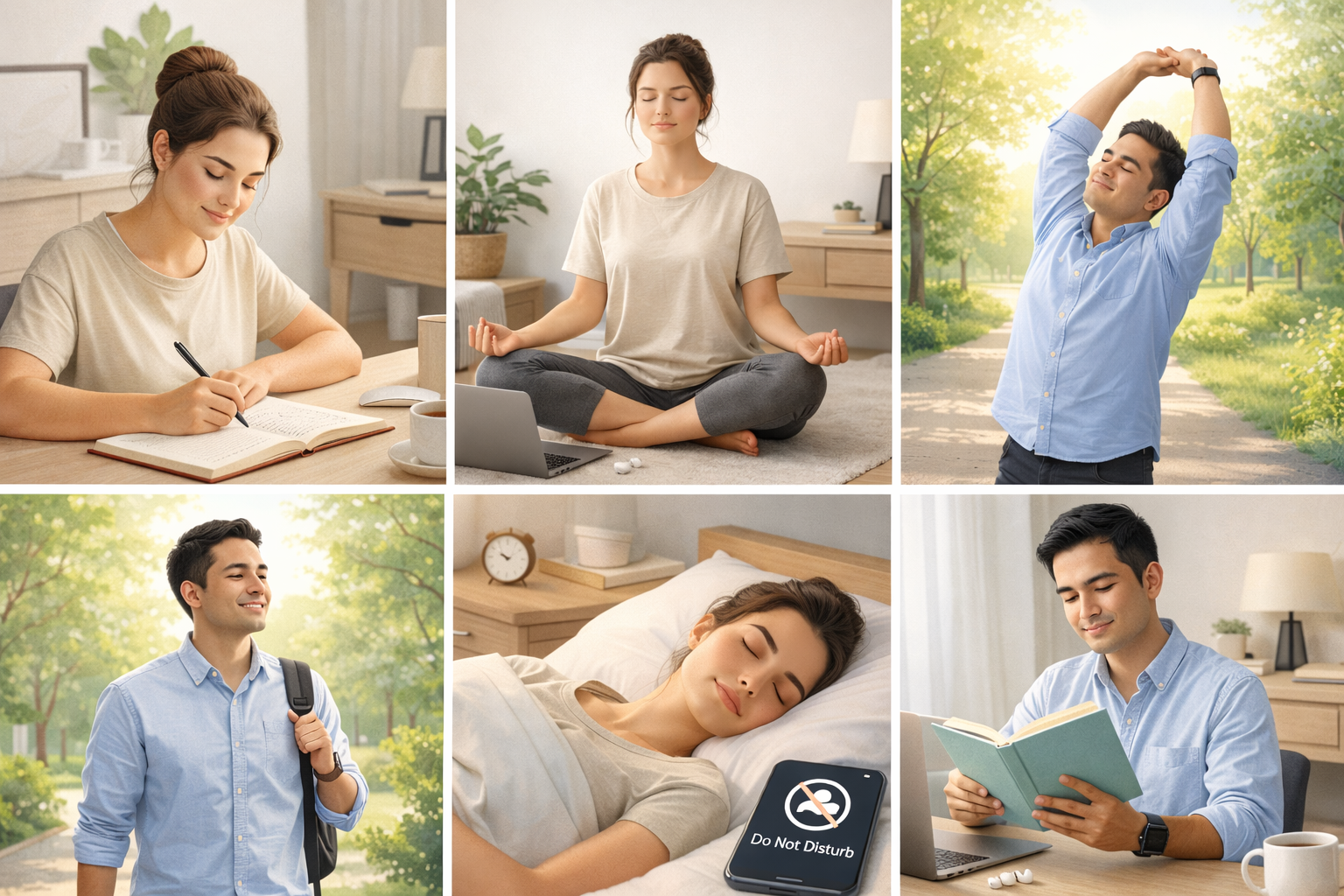
Stretching in the morning, reading, or planning the day or a few minutes of mindfulness practice can be a productive morning routine. These little tasks will assist in setting the mind to future activities as the mind will feel less overwhelmed. A regular routine will also help motivate and be more mentally sharp in the long run.
Be Mindful and Living in the Moment
The act of being attentive and judgment-free in the present is referred to as mindfulness. This practice will make persons more conscious of their thinking and feelings instead of being carried away by them.
Meditation, deep breathing exercises, or just a close attention to professional activities like walking or eating can be the part of daily mindfulness. This helps them to feel less anxiety and better manage their emotions as they tend to slow down and become more present. Mindfulness also improves the capacity to think critically to stressful conditions and respond to them.
Exercise on a Routine Basis
Both physical and mental health are interrelated. Exercise helps in releasing endorphins and other chemicals in the brain which elevates positive mood and loss of stress.
It is not mandatory that one engages in vigorous workouts to be able to do daily physical activities. The most basic exercises like walking, stretching, cycling, or yoga can also have a tremendous positive effect on mental health. Exercise will also alleviate anxiety and depression symptoms and also enhance the quality of sleep and mental performance. The use of movement in the everyday lifestyle promotes physical activity and psychological stability.
Prioritize Quality Sleep
One of the most underlying aspects of mental well being is sleep. The brain interprets information during sleep, manages emotions and replenishes the stores of energy. Low sleep patterns may result in sleep irritability, low concentration, and stress.
Regular sleeping also contributes to regularity of internal clock in the body and better thinking in general. By establishing a bedtime ritual, reducing the amount of time in front of the screens before bed, and providing a comfortable sleeping environment, it is possible to greatly enhance the quality of sleep. Sleep boosts the memory, decision-making capacity and emotional stability.
Practice Gratitude Daily
Gratitude is an effective psychological practice that helps one reorient and look beyond at the good sides in life. As people learn to recognize things that they are thankful about on a regular basis, their attitude slowly changes to a more positive and stronger one.
One of the easiest methods to express gratitude is by noting down three things every day that have made a person happy, comfortable, or satisfied. These may be positive relationships, individual success or even little life pleasures. In the long run, gratitude training can enable people to create a more moderate look at the issues and chances in life.
Manage Digital Consumption
Technology is not something to despise, but an overload of screens and continuous notifications on the phone may also cause mental fatigue and anxiety. Unceasing exposure to social media, news notifications, and online communication may smash the brain and decrease productivity.
Forming healthy online habits may make one sharper mentally and feel better. This can be by setting time limits to check emails, using social media sparingly or even adopting screen breaks. The moments of digital disconnection will help the brain to rest and concentrate on other important issues.
Extraordinarily, have nontrivial social ties.
People are social creatures and good relationship is crucial in keeping one emotionally healthy. Positive interactions with the friends, relatives, or workmates bring consolation to the time of need and boost a sense of belonging.
Long conversations are not always necessary in the daily interaction. Relationships can be reinforced with the help of simple gestures like sending a message, having a short phone call, or even sharing a meal. Social networking is beneficial in the level of stress management since having positive social networks enables the individual to deal with stress better and develop resilient mental well-being.
Establish achievable Goals and priorities
Trying to do a lot of things simultaneously is one of the usually common causes of stress. In cases where the load is too much, the person will develop anxiety, frustration or lack of motivation.
By establishing clear realistic goals, this assists in creating structure and direction. Challenges can be made more manageable by dividing big tasks into smaller and manageable ones.
Make Choices and Do What is Pleasurable
Mental wellness does not just mean de-stressing but also engaging in positive experience development. Having fun and interests that are pleasurable can go a long way to enhance emotional well-being.
Such creative outlets include reading, writing, painting, music, or gardening as a way of relaxation and making one self. These engagements enable the mind to forget the commitments, at least, temporarily and enjoy and become creative. Being involved in pleasant activities on a regular basis also balances emotions and minimizes fatigue of the mind.
Consider and Practice Self-Compassion
Self reflection is also a significant practice that promotes individual development and emotional sensitivity. Spending time to analyze thoughts, experiences and everyday activities will enable people to know their strong points and areas that need improvement.
Self-compassion is also significant to learn. Patience and understanding of oneself can be learnt instead of reproaching oneself whenever he or she makes a mistake or a setback. Learning to live with the flaws and seeing individual improvement is a way to develop resilience and an emotionally calm state.
Self-reflection and self-compassion help people to build more healthy relationships with themselves and face challenges more confidently.
Final Thoughts
Mental health cannot be reached by one event but a series of daily routines. With such activities like having a structured morning routine, physical exercise, digital use, and trying to maintain positive relationships, one can make a big change in terms of emotional health.
Leave a Comment: