

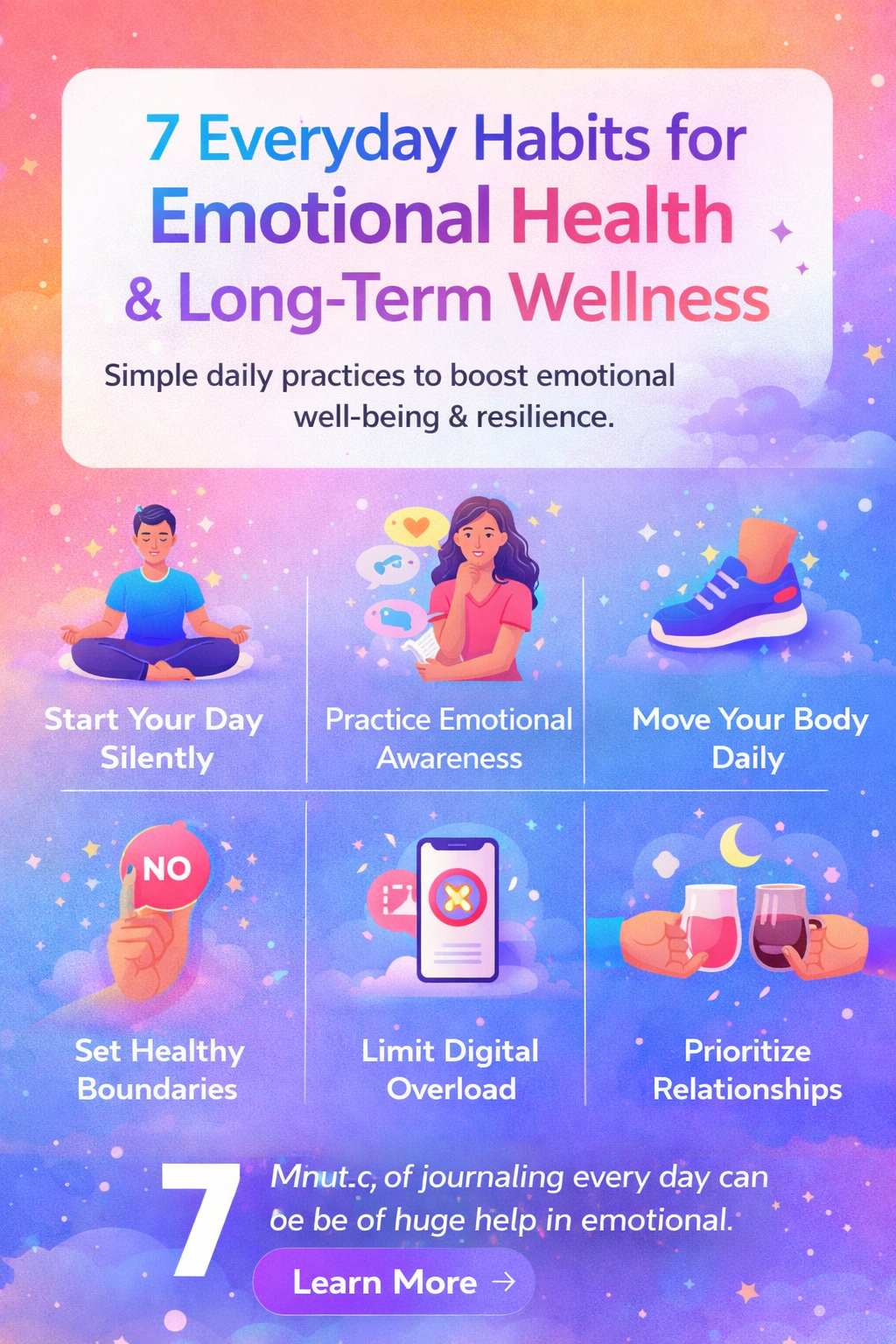
The modern world and its rush is such that the emotional health is more of a backseat to productivity, deadlines and responsibilities. However, your mental health has a direct impact on the physical health, relationships, decision making, and life satisfaction.
The good news? Emotional strength is not something that a person is born to have, but something that he or she develops every day.
The following are 7 effective daily habits that promote emotional wellness and health in the long run.
1. Wake up your Day with a Silent Mind
You have 5-10 minutes to yourself before you start checking your phone or get down to tasks.
This could include:
Deep breathing
Meditation
Light stretching
Gratitude reflection
Waking up relaxed will decrease stress hormones, as well as enhance emotion regulation during the day.
Why it is important: It is an emotional start to the entire flow of events as it is a serene morning.
2. Learn to be emotionally conscious
Most of the individuals are repressive of emotions rather than processing them.
It is good to make it a habit and ask yourself:
What am I feeling right now?
Why do I feel this way?
What does this emotion need?
Labeling your emotions dilutes emotional intensity and makes them more precise.
Tip: 5 minutes of journaling every day can be of huge help in emotional awareness.
3. Move Your Body Daily
Exercise is not simply the matter of fitness, but emotional medicine.
Exercise:
Secrecy releases endorphins (natural mood upsurges).
Reduces anxiety
Improves sleep
Builds resilience to stress
Maybe you do not have to do hard exercises. Even a twenty minutes walk would help.
Nobody wins the battle by being the strongest.
4. Set Healthy Boundaries
Exhaustion can be emotional and is usually caused by giving too much.
Healthy boundaries include:
Saying “no” without guilt
Protecting your time
Avoiding sources of negativity
Being able not to explain your choices much
Limits are not egocentric, but respect to self
5. Reduce Digital Overload
You are bombarded with constant notifications.
Daily habits to try:
No cell phone within the first time of waking.
Scheduled social media time
Tech-free meals
No screens 1 hour before bed
Digital detox is beneficial in terms of concentration, better sleep habits, and mood.
6. Feast On Supportive Relationships
People are programmed to be connected.
Take time everyday (at least a minute or two) to:
Check in with a loved one
Engage in an effective dialogue.
Express appreciation
Offer support
Good relationships are considered to be one of the largest predictors of long-term well-being.
7. End the Day With Reflection
Before sleeping, reflect on:
3 things that went well
A challenge you handled
One thing you’re grateful for
This will switch your brain out of stress mode and into gratitude mode, and that will make you sleep better and become more emotionally resilient.
The Long-term Effect of Daily Emotional Care.
Emotional health is not created in a breakthrough event. It is constructed in small day to day decisions.
Being exercised regularly, these habits:
Decrease the depression and anxiety.
Improve relationships
Increase stress resiliency.
Enhance life satisfaction in general.
Support physical health
Wellness has nothing to do with being perfect. It is concerning sustainable everyday correspondence.
Final Thoughts
You do not have to transform your entire life in one day. Start with one habit. Master it. Then build from there.
Emotional wellness is an ongoing process of life–and it starts with what you are doing to-day.
Leave a Comment: